1. Summary
In August, we published “Loving Lilium (25): The Investors Journey III. In this article, we discussed the crucial need for government support to bolster investor confidence. On October 17th, however, the Federal Government’s budget committee decided to block a €50 million guarantee. Today, we provide an update for the historical record on this still-unfolding crisis. Our beloved Lilium now lies in Munich’s intensive care, sustained by the lifeline of creditor funding. Lilium has confirmed it is continuing to build Lilium Jet prototypes and plans to begin test flights, while KPMG, acting on behalf of the administrators, initiates an M&A process.
This setback presents an opportunity for countries with a long-term strategic vision – those eager to play a pivotal role in advancing sustainable aviation technologies – where Germany has fallen short.
We hold out hope for all dedicated Lilians and Lilium Lovers that the Lilium will rise again. Yes, we still love her, and we hope there are investors out there who feel the same spark and recognize the dedication woven into her design and feel her potential.

The world needs this bird to soar, as a beacon of hope for a sustainable future
2. The Berlin Wall Crash
The budget committee of the Federal Government decided to block a 50 mln guarantee that should back a commercial loan to Lilium of 100 mln, together with German freestate Bayern where Lilium is located. A few days before the descision Liliums CEO Klaus Roewe wrote on LinkedIn: “There are some misunderstandings in Berlin regarding the topic of the ‘KfW loan for Lilium.’ Therefore, I would like to clarify:
- This is about entering electric aviation as a contribution to decarbonization, not about air taxis. Battery-electric flying will be available for 80% of all current flights, and only for long-haul flights will e-fuels be unavoidable. Batteries are three times more efficient than hydrogen and are already available today.
- Lilium is to receive a fixed-interest loan of €100 million as a signal to our investors that Germany supports the entry into electric aviation. This is not about rescuing a crisis-ridden company with subsidies. The loan is fully repayable, and the terms are very favorable for KfW, and thus for Germany.
- Our private investors—mostly from the USA and China—have already financed Lilium with $1.5 billion. They are eager to continue investing, but they also want a signal that investing in a German company is not a disadvantage. There has never been a successful aircraft program in the world that was not supported by the state. The initial investments are simply too high to be borne purely by the private sector. Take Airbus, for example: today, it is a major employer and taxpayer.
- Our investors have several alternatives. The USA, China, the UK, and France have long provided significant support to Lilium’s competitors and continue to do so. If the level of support in Germany differs too greatly, Germany will not be competitive as an investment location. Lilium’s competitor Joby alone has received more than $600 million in support from the USA so far.
- Lilium already has over 1,100 employees and around 2,000 jobs with suppliers. Lilium alone pays €50 million per year in taxes and social contributions in Germany. Therefore, a federal guarantee of €50 million is a very moderate investment. Bavaria has already provided its guarantee for the KfW loan in the same amount.
- The Lilium Jet is the aircraft program with the highest number of orders before its first flight in aviation history. More than 100 firm orders and over 600 pre-orders are a world record. The Lilium Jet is by far the most efficient, powerful, and safest electric aircraft.
- Do we now want to let the electrification of aviation also migrate abroad, when the world’s best technology for it has been developed by German engineers? Shouldn’t pragmatism prevail over ideology in this case? Does Germany want to buy electric airplanes from the USA and China in the future, just like it once bought passenger planes (Boeing, McDonnell Douglas, Lockheed) because we didn’t have our own industry?”
Ironically, the Greens blocked the Federal Government support. This reflects their incompetence to look more than 10 years forward with GreenTech investments, not understanding that German needs to focus GreenTech and DeepTech Investments to secure engeneering and production capacities in Germany for the next decades. German freestate Bavaria reacted furiously about the federal budget committee’s decision, as Bavaria Minister President Markus Söder wrote on LinkedIn:
“Another case of Bavaria-bashing and a bitter setback for Germany as a technology hub: The Greens in the coalition are denying support to the Bavarian aviation company Lilium. Old industries in the north, like shipyards, are being supported by the federal government with billions, but for future investments in the south, not a single cent. This is a blatant mistake and further serious discrimination against Bavaria. The coalition is thus blocking urgently needed innovation in Germany and putting over 1,000 highly specialized jobs at risk. It is downright negligent how the future opportunities of our country are being handled. Bavaria stands for innovation and progress. As a free state, we are ready to ensure our contribution to the further development of the company at its local site. However, the federal government is refusing this support and thereby sabotaging the entire project. It’s about a KfW loan guarantee from the federal government and the state. Although this was planned and agreed with the Chancellor’s Office, the Greens in the coalition are now blocking the support. Typical Greens! They are and remain anti-innovation, and are therefore responsible when German creativity migrates to the USA, France, or China. This harms Germany as an economic location.”
After Bavaria also decided not to fill the gap left by the federal government, it became clear that Lilium had no Plan B and became insolvent. See the SEC filing below from Thursday, 24 October:
“As previously reported, Lilium N.V. (the “Company” or “Lilium”) has been engaged in fundraising initiatives to raise additional cash including from the German government and other sources. On October 17, 2024, Lilium received an indication that the budget committee of the parliament of the Federal Republic of Germany would not approve a €50 million guarantee of a contemplated €100 million convertible loan for Lilium from KfW. In addition, as of the date of this report, Lilium and the Free State of Bavaria have not reached an agreement in principle with respect to a guarantee of at least €50 million. Furthermore, despite its continuous and ongoing fundraising efforts, the Company has not been able to raise sufficient additional funds to continue the operations of Lilium GmbH and Lilium eAircraft GmbH, Lilium’s principal operating wholly-owned German subsidiaries (the “Subsidiaries”).
In what we can now call “hindsight wisdom,” we can conclude that Lilium should have left Germany sooner and secured major strategic investors earlier on. Lilium sped headlong toward the Berlin Wall but, unfortunately, didn’t take off in time.

3. The eVTOL Shake Out
So, Lilium ran out of cash and filed for insolvency. In Loving Lilium (4) The Industry Shakeout we already wrote about an upcoming shakeout in the eVTOL industry, especially among the countless rotor-based developers who ultimately lack differentiation. But that Lilium – the only unique player in the field – would be one of the first to face insolvency directly caused by the Berlin Wall Crash came unexpected.
4. The Investors Journey
The withdrawing German federal government, followed by the state of Bavaria, sent a signal to investors not to continue financing. It also became clear that, among others, major shareholder Tencent was no longer willing to step in. Of course, it was known that cash was running out, but over the past few years, the management always managed to secure funding. Tencent, Lilium’s largest investor with nearly a 25% stake, had provided support in the past, such as in May 2023 and 2024, but it seems Tencent was no longer willing to fill the gap. In short, Tencent’s investment in Lilium was no longer “too big to fail” for them. It seems Tencent became exhausted for now and / or foresaw the need for much more capital in the future. Allowing a company to slip into insolvency typically destroys the invested capital and causes significant damage to the trust of employees, customers, and suppliers. You don’t do that lightly.
The long-anticipated necessity for a major strategic player to step in to restore confidence and give the company a boost – as Stellantis did with Archer last year – never materialised in time. We waited too long for the entrance of such a partner. As existing shareholders of Lilium, we must now face these harsh facts. The investment will likely have to be written off entirely or largely. It remains a start-up, a high-risk investment.

The lack of resources and strategic partners undermine Liliums Ambition (source LovingLilium.com)
Last year, we began our Lilium investment at the then low point of just over 40 cents, just before the share price rose to a summer high of $1.90. About 18 months later we unfortunatly had to take our losses, immediately after the insolvency announcement, being pushed well beyond our risk limits. This is a painful moment, but we we are proud that we took the risk to support Lilium. We received questions form our followers on LinkedIn and the best one was “Do you still love Lilium?”

Falling in Love, the start of our Loving Lilium publications
5. Still Loving Lilium?
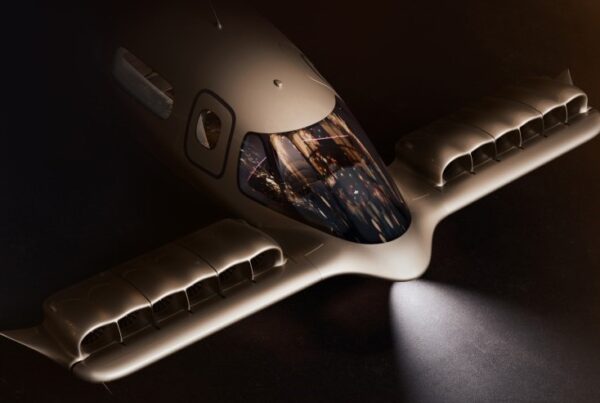
This past April, we visited Lilium and witnessed the incredible positive energy of all the Lilians working tirelessly to bring the Lilium Jet to its next milestones. This unique and beautifully crafted jet has a visible elegance and a tangible soul. Yes, we still love her, even as she lies in intensive care. The loss of investment funds doesn’t change that. We stand in solidarity with all the Lilians as they continue to strive towards towards new milestones such as ground testing and first manned flight, even in this uncertain time.

Source Lilium: during the KPMG M&A proces, teams on the ground continue to work towards achieving program milestones
We hope and pray that new investors will step in to purchase the assets and complete the development and entry into service. It’s an opportunity for countries that are truly committed to strategic, sustainable innovation, as Germany failed to do so. Will the Middle East benefit from it?

Inspired? Please share this link https://www.linkedin.com/pulse/loving-lilium-26-berlin-wall-crash-menno-van-diermen-1skxe
Read this article on LinkedIn
Read all other Loving Lilium articles on LinkedIn
Download the Full Story e-Book about Lilium for free on LovingLilium.com
Disclaimer. Please note that this article is not an advice to buy or sell Lilium stock nore other eVTOL stocks. Investing in startup’s is high risk and timing is difficult, you can lose all your money. So the (high) risk profile must fit your (high) risk appetite. We are not independent; we have or had a Lilium stock position. We still believe that Lilium after a restart can become the leading eVTOL in Regional Air Mobility, and perhaps the leading eCTOL in RAM. We don’t believe in Urban Air Mobility (UAM) for a viable business model.